


Mrs. Gladys Laster: This Woman's Bravery, Courage, and 1975 Landmark Court Order Desegregated the Faculty and Staffs at Alabama's Historically White Junior Colleges and Trade Schools

By: Donald V. Watkins
Copyrighted on July 3, 2026

Mrs. Gladys Laster played a historic role in desegregating higher education in the state of Alabama. She served as a named plaintiff in the landmark federal school desegregation case of Lee v. Macon County Board of Education.
In 1975, Mrs. Laster battled the all-white Alabama State Board of Education to end racially discriminatory employment practices in the state's public system of junior colleges and trade schools.
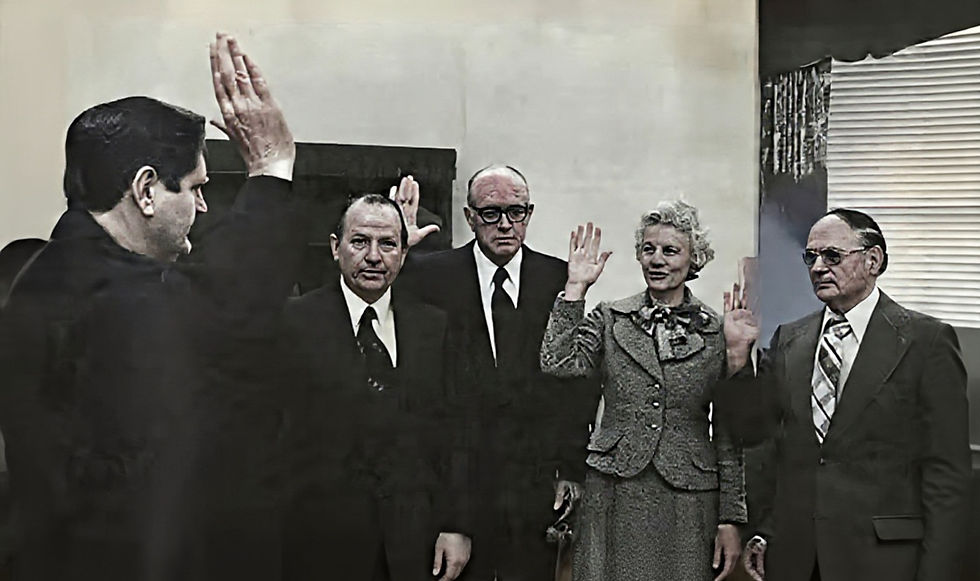
Mrs. Laster’s specific legal battle on January 7, 1975, directly forced the state of Alabama to remedy decades-long racial discrimination against black educators and administrative staff members in the state's 21 public junior/community colleges and 21 public trade/technical schools, as they existed in 1975.
Initiated in 1963, the Lee v. Macon case originally sought to integrate public K-12 schools in Macon County, Alabama. Managed by famed civil rights attorneys Fred Gray, Solomon S. Seay, Jr., and a battery of lawyers from the NAACP Legal Defense Fund, the lawsuit expanded into a statewide omnibus case that encompassed all of Alabama's public K-12 school systems and all of the state's junior colleges and trade schools.
Gladys Laster’s Role in Faculty and Staff Desegregation
Mrs. Gladys Laster was a tenured black cosmetology instructor at the John M. Patterson State Technical School in Montgomery. Mrs. Laster experienced employment discrimination at Patterson when she was dismissed during a reduction in force (RIF) at the college. White cosmetology instructors with lesser objective qualifications and far less work experience were retained during the RIF, including one or more who were not tenured instructors.
Mrs. Laster’s case was assigned to me, as a network attorney for the NAACP and National Education Association, and as a staff attorney at the law firm of Gray, Seay, and Langford.

On January 7, 1975, I sued the all-white Alabama State Board of Education on behalf of Mrs. Laster and other black junior college and trade school instructors, administrators, and staff members who were similarly situated. The Board was the governing body for all public junior/community colleges and trade/technical schools in Alabama. We pushed for expedited discovery and a quick hearing date.
On August 4, 1975, Mrs. Laster won a sweeping victory in this landmark case. The court entered a Order against the Alabama State Board of Education that permanently enjoined the Board from engaging in any act that had the purpose or effect of discriminating on the basis of race in the employment, assignment, promotion, demotion, salary, and dismissal of faculty, staff, and other employees of junior colleges and technical school operated by the Board.
The Order required the Board to establish "uniform non-discriminatory written standards and procedures for evaluating applicants for faculty and staff positions at all state junior colleges and technical schools" in the state.
The court also ordered the Board to immediately award Mrs. Laster a cosmetology job at a salary level commensurate with her qualifications and experience. Additionally, the Board was required to give Ms. Laster the first option for any cosmetology openings at John Patterson, together with the tenure status she previously held at Patterson.
Finally, the Order mandated that Alabama state junior college and technical school presidents systematically review and report the percentage of black faculty and staff on an annual basis. They were ordered to actively desegregate their workforces to reflect the availability of qualified black instructors.


Mrs. Gladys Laster’s bravery and courage as a named plaintiff in this 1975 landmark case systematically dismantled the "whites-only" hiring practices that locked black instructors, administrators, and staff members out of Alabama's historically white community and technical colleges.
Mrs. Laster single-handedly opened the door for thousands of black educators and staff members to work at historically white junior/community colleges and trade/technical schools in Alabama over the next five decades. She is the Rosa Parks of post-secondary education in Alabama.
In 1984, I sued the State Board of Education as the named plaintiff in Watkins v. Alabama State Board of Education, No. 84–H–746–N (M.D. Ala.), to ban a districting plan for electing State Board members that was unconstitutional because it minimized black representation on the board and violated the “one-person, one-vote” principle. I won in the trial court and the victory was affirmed on appeal. See, Watkins v. Alabama State Board of Education, 751 F.2d 392 (11th Cir. 1984).
Today, two blacks serve as elected members of the Alabama State Board of Education.


Mrs. Gladys Laster, no doubt is a freedom warrior who name is mentioned in the same breath of Mrs. Rosa Parks, Mrs. and Fannie Lou Hamer. Mrs. Laster stand to take on the Alabama Board of Education evidence a real commitment of inclusion of everyone regardless of their social, economic, and racial back heritage.
Her courage to stand up to the Alabama Board of Education afforded you the opportunity to display your extraordinary legal skills leading to a historical victory.
Mrs. Gladys Laster may not have known the impact of "Diversity Equity Inclusion" would've had on equal access, but one thing for sure, she understood that having access could be the difference between success or failure.
Mrs. Gladys Laster another…
This was my first landmark civil rights case in higher education. I had only been out of law school for two years. Mrs. Laster's sweeping 1975 court order paved the way for my 1981 litigation to desegregate all 32 of Alabama senior public colleges and universities. That case was litigated for 25 years and ended in 2006.